Showing posts with label hearing loss. Show all posts

Tuesday, June 14, 2022

Sound over-exposure causing musicians hearing loss

famous hearing impaired rock and rollers over-exposure hearing loss.

When I was about six years old I would create instruments with my friends.  Most memorable are the drums we would make from a box or using the tennis racket as a guitar.  Needless to say, today I'm not a rock and roller or musician for that matter, but a listener of nearly any genre of music.  

It's almost frightening to think that over-exposure to something you love with great passion would cause your damage. Especially when that thing you love has the power to create a following, and fill a colosseum of loyal fans.  This rings true for famous hearing-impaired rock and rollers.

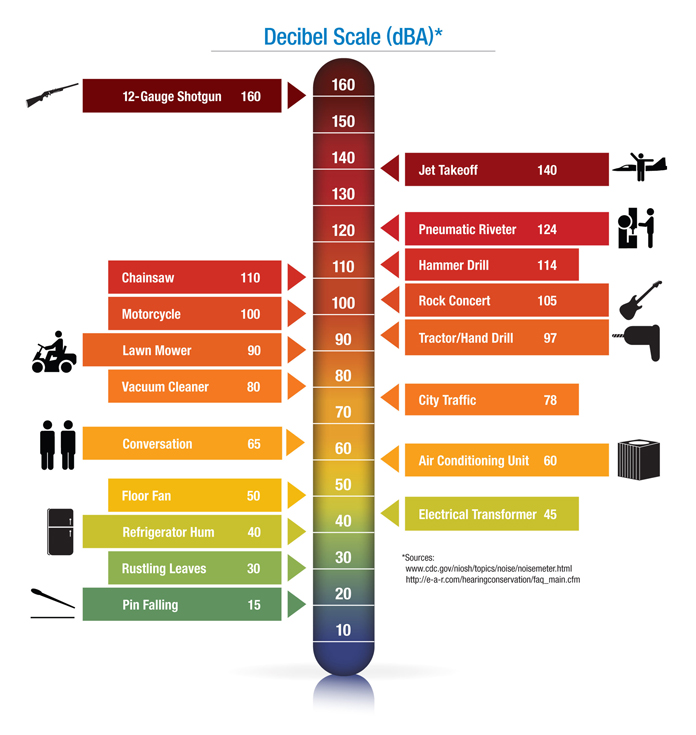
Basically, yes, sound exposure is the main factor behind musicians with hearing loss. It also makes sense. Sound during rehearsals can oscillate between 80 and 90 dB. Regular rehearsing under these circumstances is a considerable tinnitus risk.

List of Rockers With Hearing Loss Grows

  • Huey Lewis discussed how hearing loss and Menière’s disease cut his singing career short in a recent Starkey Sound Bites podcast. (Harmonica)
  • Pete Townshend has talked about his hearing loss for decades, blaming it on studio headphones, not his band’s thunderous live music. (Fender Stratocaster)
  • Roger Daltry confessed in a 2018 San Diego Union-Tribune article that he is “very, very deaf.” (flute, harmonica, tambourine, and guitar)
  • Danny Elfman switched to composing soundtracks after fronting his band, Oingo Boingo, which left him with hearing loss and tinnitus. (Guitar)
  • Mick Fleetwood has gone on record with his hearing loss, even participating in a “quiet” rock concert back in 2005 to raise awareness about hearing loss. (drummer)
  • Sting has admitted to dealing with hearing loss, but so far has resisted getting hearing aids to help. (Sting)
  • Alice Cooper proudly brags about wearing “clearing aids” to help him overcome the hearing impairment he got from “55 years of blaring loud rock music.” (Guitar)

Musicians are more likely to experience an auditory decline

They’re among a growing number of musicians suffering from hearing loss after decades of exposure to loud music. The problem is especially prevalent in the ranks of boomer rockers, including Pete Townshend of The Who, Neil Young, and Sting.

Achieve Hearing & Rehabilitation is a speech and hearing clinic with locations in Plano and Dallas, Texas. Achieve Hearing offers speech-language pathology and audiological services, as well as hearing aids for children and adults of all ages. The Achieve Hearing staff includes an Audiologist and Speech-Language Pathologists that are licensed in the state of Texas and certified by the American Speech-Language-Hearing Association (ASHA).

Achieve Hearing & Rehabilitation has locations in Plano and Dallas.  Get answers to your hearing loss questions by call us at 972-608-0416 or learn more at achievehearing.com

Friday, February 5, 2016

Prescription Drug Use Resulting In Hearing Loss


Being a parent means having talks that are not necessarily fun, but definitely necessary. Now that I have two teenagers, I seem to be having more and more of these talks, although I started them when the girls were really little… especially when it comes to substance abuse.

As soon as the girls could talk, we started talking about drugs, alcohol, and cigarettes. I wanted them to know that they can always talk about these things to me and Pete, and what was acceptable and not in our family. We set expectations from the very beginning and we continue to add to our talks as they get older.

Source: Tips To Talk To Your Kids About Drugs & Alcohol

Did you know?
Certain medications can damage the ear, resulting in hearing loss, ringing in the ear, or balance disorders. These drugs are considered ototoxic.

There are more than 200 known ototoxic medications (prescription and over-the-counter) on the market today. These include medicines used to treat serious infections, cancer, and heart disease.

Hearing and balance problems caused by these drugs can sometimes be reversed when the drug therapy is discontinued. Sometimes, however, the damage is permanent.

For cases in which the drugs cannot be stopped or changed, the patient and the audiologist can take steps to manage the effects of the hearing loss that results.  Most adults acquire hearing loss gradually over time. Thus, many people with a significant hearing loss avoid getting help because they do not realize they have a problem.

Hearing loss can affect relationships, education, productivity, and most importantly, emotional well being. For the estimated 30 million people in the U.S. who have a hearing loss, selecting the most suitable hearing solution can be a critical factor in achieving a balanced life.

Achieve Hearing & Rehabilitation is a speech and hearing clinic with locations in Plano and Dallas, Texas. Achieve Hearing offers speech-language pathology and audiological services, as well as hearing aids for children and adults of all ages. The Achieve Hearing staff includes an Audiologist and Speech-Language Pathologists that are licensed in the state of Texas and certified by the American Speech-Language-Hearing Association (ASHA).

Thursday, January 28, 2016

Loud Super Bowl and Crowd Noise

NFL Conference Championships | New England Patriots vs. Denver Broncos (18 - 20 Broncos)


For diehard football fans, nothing beats screaming your lungs out in the stadium alongside tens of thousands of other fans.

There is, however, a downside: hearing loss.

With the battle among fans to be the loudest crowd getting almost as competitive as the NFL itself, hearing experts say it's time for a serious conversation about the damage caused by crowd noise.

Source: Extremely Loud And Incredibly Close: Fans Risk Hearing Loss

Family and friends will gather at tailgate parties during the Super Bowl while others search high and low for one more chair to somehow squeeze into an already crowded living room.  There will be man caves bulging with testosterone around the world.  Some lucky football fans will have the opportunity to experience this mega event in epic proportions – cheering for their favorite Super Bowl team at Levi's Stadium.  This all sounds great until you lean how the loud Super Bowl screaming and continuous exposure to crowd noise can be really bad for your ears.


Did you know?
Decibel levels exceeded 118 dB during this seasons NFL playoff game between the Denver Broncos and the New England Patriots.

Noise-Induced Hearing Loss Long or repeated exposure to sounds at or above 85 decibels can cause hearing loss. NIHL can be caused by a one-time exposure to an intense “impulse” sound, such as an explosion, or by continuous exposure to loud sounds over an extended period of time.

So when we look specifically at the degree of hearing loss we are talking about the severity of the loss. Example: Mild hearing loss range is 26 to 40 dB HL (decibel hearing loss).

Hearing loss can affect relationships, education, productivity, and most importantly, emotional well being. For the estimated 30 million people in the U.S. who have a hearing loss, selecting the most suitable hearing solution can be a critical factor in achieving a balanced life.  Achieve Hearing & Rehabilitation helps patients overcome different types of hearing loss. If you or someone you know demonstrates any signs and symptoms of hearing loss please call us at 972-608-0416 to discuss how Achieve Hearing can help.

Achieve a Balanced Life

Saturday, December 19, 2015

Managing Hearing Loss In Children and Adults of All Ages


It's that time of the year when we open our doors for holiday visitors and talking about old stories that everyone can smile and laugh about.  Some families will spend time opening gifts while others hit the highways and the friendly skies to visit friends, nieces, nephews, aunts, uncles, grandmas and grandpas across the United States and beyond.  So what does this have to do with hearing loss or the hearing impaired you ask?  There are three very important points the host family or friend should consider priorities:
  1.  Fire alarm decibel (dB) levels as they relate to family or friends in the age range of 61-71
  2.  Fire alarms types for people who are deaf or hard-of-hearing
  3.  Loud toys for children
One of the potential hazards during this holiday season is burning Christmas trees.  The National Fire Protection Association (NFPA) states that a dry tree can catch fire and burn faster than a newspaper.  From 2009 to 2013 there was an estimated annual average of 210 fires where home fires that started with Christmas, resulting in deaths, injuries, and over $17 million in property loss.

Experiencing a home fire can mean major trouble for grandma, grandpa if they cannot hear the alarm.  According to the Consumer Product Safety Commission (CPSC), residential smoke alarms operate at sound frequencies that may produce alarm sound characteristics poorly suited for the older population because of age-related hearing loss.

A study by Davis (1995, UK) indicated that for study participants in the age range of 61-71 years, 51% had a hearing loss greater than 20 dB and 11% had a hearing loss greater than 40 dB.  As the age range increased, the percentage with hearing loss also increased. For example, for study participants in the age range of 71-80 years, 74% had a hearing loss greater than 20 dB and 30% had a hearing loss greater than 40 dB.

The fact that older adults do not seek a remedy for their hearing loss may prevent them from effectively hearing a sounding smoke alarm, which likely places them at a higher risk of injury or death from fire.

Smoke alarms can help you escape a fire in your home and save lives. But for those who are deaf or hard-of-hearing, they cannot depend on the sound of the regular alarm to alert them to a fire.  The good news is there are smoke alarms for people who are deaf or have profound hearing loss. These alarms use strobe (flashing) lights to wake or alert the person and vibration notification appliances, such as pillow or bed shakers that are activated by the sound of a smoke alarm.  Most major smoke alarm companies offer alarms with strobe lights.

So, lets keep the Christmas tree watered to avoid a holiday fire so we can continue playing with the children and the new toys.  There is however a measure of safety we should also consider when it comes to selecting toys for the next generation.

The CPSC reminds parents to avoid toys that produce extremely loud noises that could damage a child's hearing.  For example, caps used for cap guns may also pose a noise hazard.  Toy caps and some noise-making guns and other toys can produce sounds at noise levels that can damage hearing. Do not fire closer than one foot to the ear. Do not use indoors.

The Arizona Commission for the Deaf and Hard of Hearing states some of the top toys on the market are extremely harmful for children and can lead to permanent hearing damage.  Officials say if you already own a “noisy” toy put heavy thick tape over the speaker or use the volume control. They also say parents should limit the number of hours using the toy or music player.  85 decibels (dB) is the maximum volume a child should be exposed to for no more than eight hours.

Decibels (dB) are a unit of measurement to gauge volume and decibel volume is measured in several industries including construction and engineering to ensure hearing safety. Sounds over 100 dB can damage hearing in less than 15 minutes of exposure.  You may think loud toys are mostly designed for older kids, however, the majority of noisy toys are for children 6-years-old and younger.  Lullaby type toys are often placed in cribs with infants, exposing the baby to excessive noise for extended periods of time.

"Be extremely vigilant when it comes to the toys you purchase for the holiday season and beyond."

Hearing problems can drastically affect children in their learning and social environments. The most significant impact is on: vocabulary, sentence structure, speaking, academic achievement, and social functioning.

Technology continues to astound and today there are phone apps for measuring noise levels.  We (Achieve Hearing & Rehabilitation) do not endorse these apps, however they may help you identify situations where noise levels could damage your hearing:


Noise Meters on Google Play for Android phones rated 4 out of 5 stars


Sound Meter Pro
Sound Meter PRO uses your Android's microphone to measure levels of noise or sound pressure levels and displays measured data in dB (decibels) with reference to generally known noise (provided by American Academy of Audiology) or displays the noise data on easy to read graph for the last 30 seconds of app use.

Sound Meter
This decibel meter uses your built-in microphone to measure sound volume in decibels (dB) and also displays sound level charts in the form of graph.

Sound Meter HQ
"Sound Meter HQ" calculates sound level (noise level) of surroundings with the help of built-in microphone. Result of the measurements are displayed in decibels on the screen of you phone.


Noise Meter on iTunes for iPhones rated 4 out of 5 stars

Decibel Meter Pro
Decibel Meter Pro is a bargain. It's a great tool for anyone who is concerned about noise levels

Decibel Meter
Decibel Meter (Pro) also tells you decibel exposure time guidelines. It tells you how loud is too loud. It tells you what's Noise induced hearing loss and how to avoid it

SPLnFFT Noise Meter
For daily use, a very simple interface displays the level of exposure: if orange or red, protect your ears

Most adults acquire hearing loss gradually over time. Thus, many people with a significant hearing loss avoid getting help because they do not realize they have a problem. People who seek early treatment often report that their lives are dramatically improved.

Hearing loss can affect relationships, education, productivity, and most importantly, emotional well being. For the estimated 30 million people in the U.S. who have a hearing loss, selecting the most suitable hearing solution can be a critical factor in achieving a balanced life.  Achieve Hearing & Rehabilitation helps patients overcome different types of hearing loss. If you or someone you know demonstrates any signs and symptoms of hearing loss please call us at 972-608-0416 to discuss how Achieve Hearing can help.

Achieve a Balanced Life


References

The Arizona Commission for the Deaf and Hard of Hearing
Consumer Product Safety Commission (CPSC)
National Fire Protection Association (NFPA)

Friday, November 20, 2015

Ringing In The Holidays with Tinnitus


It’s almost impossible to hide hearing loss when you’re surrounded by loved ones during the holidays. Common signs of hearing loss include not being able to hear well in a crowded room, having trouble hearing children and women, and asking family and friends to repeat what they’re saying. These symptoms became more pronounced in my grandpa during the holidays: smiling and nodding during the holiday dinner was a telltale sign that he was not able to follow the conversations.

Source: Hearing Loss and the Holidays

Do you hear a ringing, roaring, clicking or hissing sound in your ears? Do you hear this sound often or all the time? Does the sound bother you? If you answer is yes, you might have tinnitus and should contact our licensed Audiologist, Michael Gehan, M.S., CCC-A.  Michael is licensed by the Texas Department of State Health Services.  Tinnitus is the number one disability among Veterans returning from war and it affects a minimum of 1 in every 10 American adults.

The NIH (National Institute on Deafness and Other Communication Disorders):

  • Roughly 10 percent of the U.S. adult population, or about 25 million Americans, has experienced tinnitus lasting at least five minutes in the past year.
  • Nearly 25 percent of those aged 65 to 74 and 50 percent of those who are 75 and older have disabling hearing loss.
  • Tinnitus treatment depends on the cause. Treatments may include hearing aids, sound-masking devices, medicines and ways to learn how to cope with the noise.

Google Trends Tinnitus Interest for Dallas - Ft. Worth, Texas

Studies show up to 50% of all veterans returning from war suffer from tinnitus.  It’s an invisible injury often linked to repetitive loud noises.  “Sometimes it’s so overwhelming you can’t focus or you can’t communicate, you can’t sleep,” Vaught said after enduring the explosive sounds of war in Iraq, Allen Vaught may have been looking forward to silence.

Achieve Hearing & Rehabilitation helps patients who suffer from tinnitus. If you or someone you know demonstrates any signs and symptoms of tinnitus please call us at 972-608-0416 to discuss how Achieve can help.

Achieve Hearing & Rehabilitation is a speech and hearing clinic in Plano, Texas. We offer speech-language pathology and audiological services for children and adults of all ages. Achieve is in-network with Aetna, Cigna, BlueCross BlueShield, Medicare, and United Healthcare. We can help obtain information about your policy to determine if services are covered under. Please call us at 972-608-0416.

Achieve a Balanced Life

Thursday, October 15, 2015

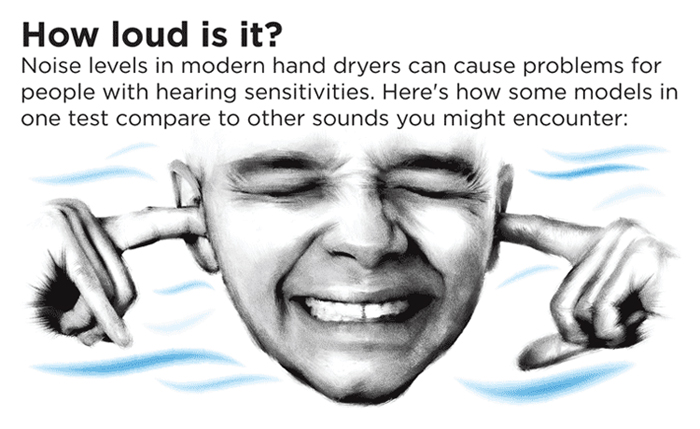
How loud is it?


In recent years, paper towels and inefficient hot-air hand dryers in many public restrooms have been replaced by cool-air hand dryers that are intended to dry hands in less than 15 seconds and cut down on the cost and waste of paper towels. Unfortunately, the more efficient, modern hand dryers produce extreme noise levels, especially when people lower their hands into the dryers’ high-speed jets of cool air.  With some high-speed hand dryers cranking out as much as 100 decibels, public restrooms can sometimes sound like a Megadeth concert. And that’s not exactly music to the ears for those with hearing-related issues including tinnitus


Did you know?
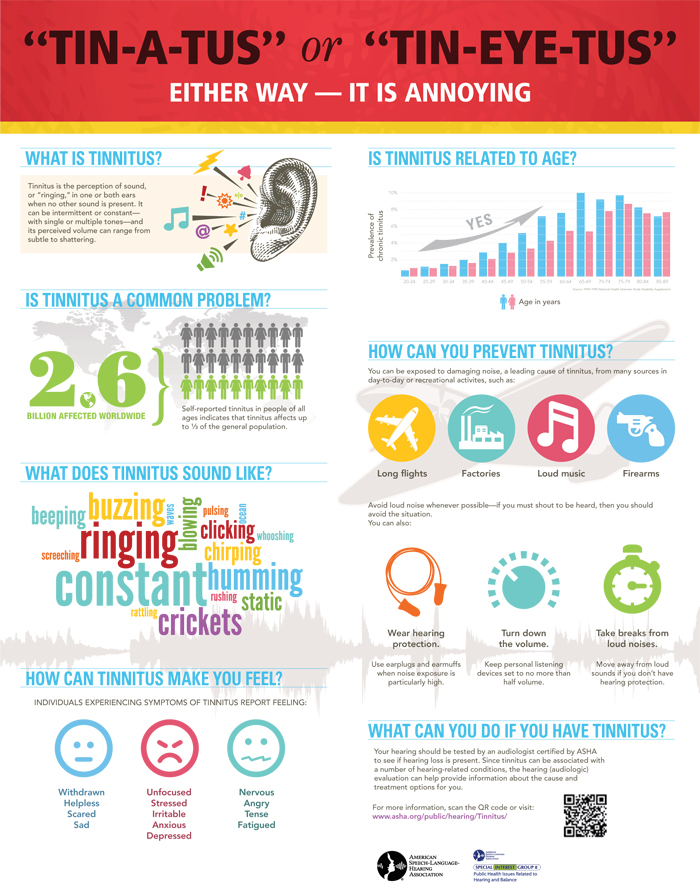
Tinnitus refers to "ringing in the ears" when no other sound is present. Tinnitus can sound like hissing, roaring, pulsing, whooshing, chirping, whistling, or clicking.

According to The American Speech-Language-Hearing Association (ASHA), almost everyone at one time or another has experienced brief periods of mild ringing or other sounds in the ear. Some people have more annoying and constant types of tinnitus. One third of all adults experience tinnitus at some time in their lives. About 10%–15% of adults have prolonged tinnitus requiring medical evaluation. The exact cause of tinnitus is often not known. One thing is certain: Tinnitus is not imaginary.


Achieve Hearing & Rehabilitation is a speech and hearing clinic in Plano, Texas. We offer speech language pathology and audiological services for children and adults of all ages. Achieve is in-network with Aetna, Cigna, BlueCrossBlueShield, Medicare, and United Healthcare. We can help obtain information about your policy to determine if services are covered under. Please call us at 972-608-0416.

Achieve a Balanced Life

Friday, September 25, 2015

Early Childhood Hearing Screening


Audiologists, by virtue of academic degree, clinical training, and license to practice, are qualified to provide guidance, development, implementation, and oversight of newborn hearing screening programs. Professional roles and activities include training screeners, monitoring program outcomes, performing screenings, advocacy, education, administration, and research. 


Hearing loss can affect relationships, education, productivity, and most importantly, emotional well-being. For the estimated 30 million people in the U.S. who have a hearing loss, selecting the most suitable hearing solution can be a critical factor in achieving a balanced life.

One of the first steps you can take to determine if you have hearing loss is to be proactive – early hearing screening and follow-up.  This is especially important for newborns children. 

In Texas, newborns are screened for 55 disorders, hearing is 1 of them.  In 2013 more newborns arrived in August than in any other month. The second, third, and fourth most popular birthday months by number of births were July, October, and September.  Texas is ranked number 2 out of the top 3 state with the most births. California, Texas, and New York (in descending order) had the greatest number of births. 

Early Childhood Hearing by the numbers:
  • Approximately 1 to 3 in every 1,000 children are identified with congenital hearing loss shortly after birth.  
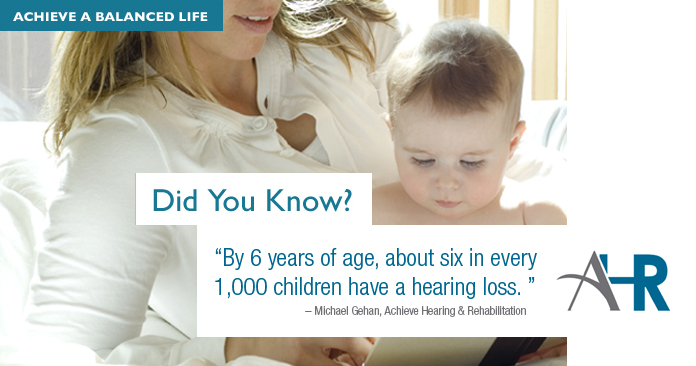
  • Hearing loss can occur at any time in a young child's life. By 6 years of age, about six in every 1,000 children have a hearing loss. 
  • Approximately 1 out of every 300 children in the U.S. is born with a significant hearing loss.  Children need to hear clearly in order to develop spoken language skills.  Therefore, periodic screening during the early childhood years will help to ensure that children are able to communicate and learn.  The goal of early childhood hearing screening is to identify concerns regarding a child's developmental, sensory, behavioral, motor, language, social, cognitive, perceptual, and emotional skills. Without appropriate screening, the condition can remain undiagnosed, or misdiagnosed, for years as the child falls further behind in cognitive, social, and emotional development.

Achieve Hearing & Rehabilitation hearing loss solutions:
  • Up-to-date information about recommended hearing screening practices
  • Tools to effectively implement hearing screening so that children with hearing-health needs are identified as early as possible and provided with appropriate follow-up services and support
  • Strategies for using hearing screening as an opportunity to promote language development in all children as an integral part of school readiness
Audiologists, by virtue of academic degree, clinical training, and license to practice, are qualified to provide guidance, development, implementation, and oversight of newborn hearing screening programs.

Otoacoustic Emissions (OAE) Hearing Screening is recommended for all children 0 – 3 years of age. It is also appropriate for many children over 3 who are unable to follow instructions and complete tasks required for Pure Tone Audiometric Screening. Pure Tone Screening has traditionally been recommended for children over 3 years of age who can follow instructions and complete screening tasks.


The OAE screening provides:

  • Quick, painless and does not require a behavioral response.
Most children will pass this third OAE screening. Less than 1% will still not pass. These children must be referred immediately for a complete diagnostic evaluation from a pediatric audiologist. 

Achieve Hearing & Rehabilitation is a speech and hearing clinic in Plano, Texas. We offer speech-language pathology and audiological services for children and adults of all ages. Achieve is in-network with Aetna, Cigna, BlueCross BlueShield, Medicare, and United Healthcare. We can help obtain information about your policy to determine if services are covered under. To schedule, an appointment call us today 972-608-0416 or send email questions to receptionist@achievehearing.com

Achieve a Balanced Life

Tuesday, April 14, 2015

The Risks of Exposing Your Ears to Shotgun Noise

man with shotgun hunting

Did you know?
Exposing your ears to shotgun firing (140 - 165 decibels) is at the top of the list for loud noises that can result in permanent hearing loss.  To be exact, regular exposure of more than 1 minute at or above 110 decibels risks permanent hearing loss.

"You do not want to reach the point of no return when it comes to your ability to hear clearly or even worse, lose your ability to hear altogether." – Michael Gehan, Audiologist, Achieve Hearing & Rehabilitation

If you live in Texas and take advantage of one of the 8 hunting regions (Trans-Pecos, Panhandle, Cross Timbers, Edwards Plateau, Post Oak Savannah, Pinewoods, Costal Prairies, South Texas) or shooting simply enjoy visiting the gun range, please make sure you adhere to safety recommendation for recreational firearm noise exposure which could result in Noise-Induced Hearing Loss (NIHL). NIHL is the only type of hearing loss that is completely preventable. If you understand the hazards of noise and how to practice good hearing health, you can protect your hearing for life.

Common safeguards that guard your ears from hearing loss:
  • National Institutes of Health - Foam insert earplugs can keep some sound intensity from reaching the eardrum, as can protective earmuffs, available at hardware and sport stores. For better ear protection, talk with a hearing specialist about getting a custom-fitted ear mold.
  • Central Texas Gun Works - Mandatory Range Equipment to Qualify : Covered Ear ProtectionDouble-protect your ears, like putting muffs over plugs, when shooting big-bore firearms.
  • U.S. Department of Health & Human Services - Wear earplugs or other protective devices when involved in a loud activity (activity-specific earplugs and earmuffs are available at hardware and sporting goods stores).  Protect the ears of children who are too young to protect their own.
  • American Speech-Language-Hearing Association - Protecting Your Hearing From Firearm Noise. Using appropriate hearing protective devices (HPDs), such as earmuffs or earplugs.
  • National Rifle Association - Law Enforcement Training › Instructor Development Schools; The following equipment is REQUIRED and must be provided by the student for ALL firearm instructor development schools: Ear Protection, Ear plugs or ear muffs (preferred).
An estimated 26 million Americans between the ages of 20 and 69 already have irreversible hearing loss caused by loud sounds. And up to 16% of teens have hearing loss that may have been caused by loud noise. This makes loud noise one of the most common causes of hearing loss. 

The Risks of Shotgun Noise
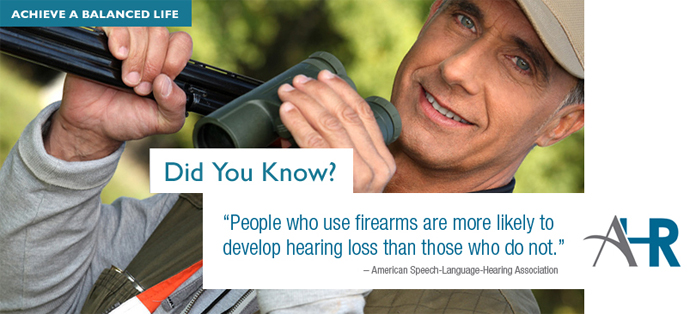
People who use firearms are more likely to develop hearing loss than those who do not. Firearm users tend to have high-frequency permanent hearing loss, which means that they may have trouble hearing speech sounds like "s," "th," or "v" and other high-pitched sounds.  The left ear (in right-handed shooters) often suffers more damage than the right ear because it is closer to, and directly in line with, the muzzle of the firearm.  The extremely loud bursts of sound, such as gunshots or explosions, which can rupture the eardrum or damage the bones in the middle ear. This kind of NIHL can be immediate and permanent.

Shotgun Noise Audio Recording

Loud noise exposure can also cause tinnitus which is a ringing, buzzing, or roaring in the ears or head. Tinnitus (affects a minimum of 1 in every 10 American adults) may subside over time, but can sometimes continue constantly or occasionally throughout a person’s life. Hearing loss and tinnitus can occur in one or both ears. Click here to lean about the three most common types of hearing loss.

The side effects of hearing loss can result in anxiety and feelings of isolation if left untreated. But there are other consequential side effects (Fatigue, Earning Power, Dementia) that are less obvious or well known. 

Hearing Loss Protection
The good news is that people can prevent hearing loss by using appropriate hearing protective devices (HPDs), such as earmuffs or earplugs. The first step is to have your ears tested for hearing loss.  At Achieve Hearing & Rehabilitation we can assess your abilities to hear clearly and produce custom earplugs for the hunting enthusiast.

Achieve Hearing & Rehabilitation is a speech and hearing clinic in Plano, Texas. Achieve Hearing offers speech-language pathology and audiological services, as well as hearing aids for children and adults of all ages. The Achieve Hearing staff includes an Audiologist and Speech-Language Pathologists that are licensed in the state of Texas and certified by the American Speech-Language-Hearing Association (ASHA).  We know that most adults acquire hearing loss gradually over time. Thus, many people with a significant hearing loss avoid getting help because they do not realize they have a problem.  You can take the online hearing exam and call us today 972-608-0416 to schedule hearing exam.

Achieve a Balanced Life

Wednesday, March 11, 2015

Test Results for Different Types of Hearing Aids


“There are specific types of hearing aids for differing types of hearing loss and individual preferences.”– Michael Gehan, Audiologist, Achieve Hearing & Rehabilitation


Your local audiologist can test your hearing to determine if you need a hearing aid or have hearing loss.


Types of hearing aids for different types of hearing loss:

  • Analog Hearing Aids – uses transistor technology and consists of a microphone, amplifier and receiver.
  • Digitally Programmable Hearing Aids - capable of adjustments in audiologist office by connecting hearing aid to a computer system.  The sound processing is NOT digital.

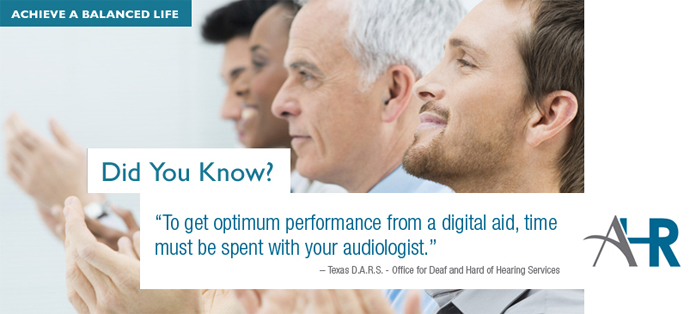
“Our product testers unanimously agree that digitally-programmable analog hearing aids are not equivalent in performance to our top-rated fully-digital hearing aids.” –Texas D.A.R.S. - Office for Deaf and Hard of Hearing Services

  • Fully Digital Hearing Aids - The Central Processing Unit, CPU, can look backward in time and make decisions about what is unwanted noise and what is the desired speech signal, thus this kind of hearing aid is more desirable when confronting background noise.
  • Directional Microphones - More sensitive to sounds arriving in front of the listener than to those arriving from the back or sides.  Fitting these on a hearing aid requires a skilled audiologist, as directional microphones are finicky.  Some sophisticated fully digital hearing aids do constant calibration of the two microphones so that the hearing aid’s noise reduction capabilities are always functioning properly.

“When both the background noise and the desired speaker of interest  are in front of you, directional microphones can not help you.” –Texas D.A.R.S. - Office for Deaf and Hard of Hearing Services 

  • Automatic Noise Reduction - Fully digital hearing aids have the capability of reducing noise that does not vary in pitch or loudness over time, i.e. the roar of your car tires becomes softer as you continue to drive (because this noise is a constant and does not vary much in pitch or loudness).
  • Multi-Memory Fully Digital Hearing Aids - Multiple memories (or programs) are set for various listening characteristics.  One program may be set for quiet, one for noise and one for telephone, for example. Most of the digital hearing aids tested by this group had more than one program.
  • Multichannel Fully Digital Hearing Aids - These break incoming sounds into multiple chunks, called channels, which make automatic noise reduction and hearing aid fine-tuning more effective. 

“Most Manufacturers will have 5 to 6 levels of technology. These levels typically dictate the price of the hearing aid. Ranging from lowest price (Entry) to highest price (Premium)”– Michael Gehan, Audiologist, Achieve Hearing & Rehabilitation

Achieve Hearing & Rehabilitation (AHR) is located in Plano, Texas and establishes individualized relationships with patients. AHR can employ a state-of-the-art hearing aid and auditory testing to provide you the best method of treatment for your hearing problems.  To speak to an audiologist please call 972-608-0416 today.

Reference: 
Texas D.A.R.S. - Office for Deaf and Hard of Hearing Services