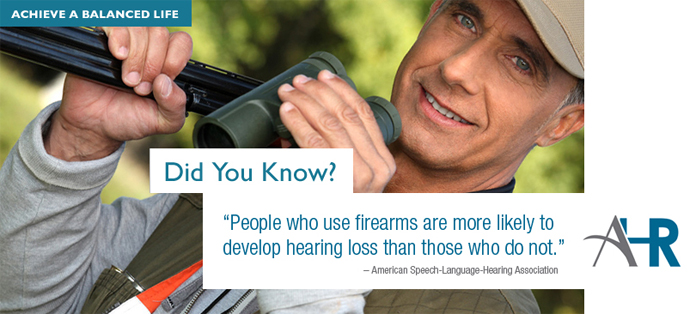
The truth about noise and hearing loss.
Earbuds and headphones help us keep our hands free to do other tasks, but they can also lead to noise-induced hearing loss if not used correctly. Studies suggest that misuse or overuse of personal audio devices will lead to cognitive overload and result in impaired performance. For those of you who dislike little buds in your ears or headphones, that’s fine, but you are not exempt from experiencing noise-induced hearing loss, especially if you attend loud recreational activities like rock concerts, NASCAR races or Monster Jam motorsport events. Very loud noise can cause permanent hearing loss. Listening to loud noise for long periods of time can damage the hair cells in the inner ear. Noise-induced hearing loss usually develops gradually and painlessly. A single exposure to an extremely loud sound such as an explosion can cause a sudden loss of hearing. This is called acoustic trauma.

Noise-induced hearing loss can affect many aspects of life. In young children, it impairs language acquisition. Learning disabilities, anxiety and attention-seeking behaviours are also common in children exposed to loud sounds.
The impact of chronic noise exposure in children is reflected in lowered academic performance and outcomes as well as reduced motivation and concentration.
If you must listen, make sure you listen safely.
The healthy hearing threshold is generally taken as 0 dB (11); a whisper is around 30 dB and normal conversation approximately 60 dB (124). Some common sounds and their intensities (dB) are indicated below. Ears are designed to process the moderate levels of sound that exist in our normal environment (e.g. quiet conversation). Common recreational activities (e.g. rock concerts, listening to personal music players), however, often involve exposure to much higher sound levels for extended periods, and scientific evidence is accumulating to demonstrate that these recreational noise activities are potentially harmful to hearing. The factors that determine the level of risk are the intensity and duration of noise exposure. Hearing protection devices can be broadly classified as either earplugs, which are inserted at the entrance of the ear canal, or earmuffs, which cover the outside of ear
Wearing ear plugs.
Ticketmaster, the ticket sales and distribution company for Monster Jam says, “We highly recommend ear protection, particularly for children that are sensitive to loud noises. At any live sporting event, children or adults may be sensitive to the noise level. Ear plugs and headphones are sold at Monster Jam merchandise stands. You can also bring your own ear protection.” The Monster Jam website says, “Our concessions staff does sell Monster Jam Tire novelty ear protection and disposable ear plugs while supplies last at each event.”
When visiting discotheques, bars, sporting events and other noisy places or participating in rifle shooting, use of hearing protection helps to avoid damage to hearing. Many countries have legislated, to a varying degree, on the use of personal hearing protection in the occupational setting. However, there is little in the way of legislation, guidelines or recommendations for use of hearing protection for recreational noise exposure.
How can noise-induced hearing loss be treated?
There is no medical or surgical cure for noise-induced hearing loss: damaged hair cells cannot regenerate . Once hearing loss begins, however, its progression can be halted by avoiding further exposure to loud sounds. At present, there are only limited management options – such as hearing aids and counselling – for individuals with even a low degree of noise-induced hearing loss. Current treatment methods for noise-induced hearing loss focus on people in severely noisy environments such as the military.
At Achieve Hearing & Rehabilitation we believe that education leads to a person's success. That's why we spend extra time with our patients to make sure they understand the results of their evaluations and personalized care plans. Achieve Hearing specializes in advanced digital hearing technologies, diagnostic audiological testing, transitioning individuals from hearing loss to successful hearing aid use, and central auditory processing. Most adults acquire hearing loss gradually over time. Thus, many people with a significant hearing loss avoid getting help because they do not realize they have a problem. If you or someone you know demonstrates any signs and symptoms of hearing loss please call us at 972-608-0416 to discuss how Achieve Hearing can help.
Achieve a Balanced Life
References:
WHO World Health Organization | Hearing loss due to recreational exposure to loud sounds
Causes of Hearing Loss in Adults | Acoustic Trauma
Ticketmaster | Monster Jam
Monster Jam | Do you supply ear protection?
Gas Monkey Garage
Earbuds and headphones help us keep our hands free to do other tasks, but they can also lead to noise-induced hearing loss if not used correctly. Studies suggest that misuse or overuse of personal audio devices will lead to cognitive overload and result in impaired performance. For those of you who dislike little buds in your ears or headphones, that’s fine, but you are not exempt from experiencing noise-induced hearing loss, especially if you attend loud recreational activities like rock concerts, NASCAR races or Monster Jam motorsport events. Very loud noise can cause permanent hearing loss. Listening to loud noise for long periods of time can damage the hair cells in the inner ear. Noise-induced hearing loss usually develops gradually and painlessly. A single exposure to an extremely loud sound such as an explosion can cause a sudden loss of hearing. This is called acoustic trauma.

The impact of chronic noise exposure in children is reflected in lowered academic performance and outcomes as well as reduced motivation and concentration.
If you must listen, make sure you listen safely.
The healthy hearing threshold is generally taken as 0 dB (11); a whisper is around 30 dB and normal conversation approximately 60 dB (124). Some common sounds and their intensities (dB) are indicated below. Ears are designed to process the moderate levels of sound that exist in our normal environment (e.g. quiet conversation). Common recreational activities (e.g. rock concerts, listening to personal music players), however, often involve exposure to much higher sound levels for extended periods, and scientific evidence is accumulating to demonstrate that these recreational noise activities are potentially harmful to hearing. The factors that determine the level of risk are the intensity and duration of noise exposure. Hearing protection devices can be broadly classified as either earplugs, which are inserted at the entrance of the ear canal, or earmuffs, which cover the outside of ear
Ticketmaster, the ticket sales and distribution company for Monster Jam says, “We highly recommend ear protection, particularly for children that are sensitive to loud noises. At any live sporting event, children or adults may be sensitive to the noise level. Ear plugs and headphones are sold at Monster Jam merchandise stands. You can also bring your own ear protection.” The Monster Jam website says, “Our concessions staff does sell Monster Jam Tire novelty ear protection and disposable ear plugs while supplies last at each event.”
When visiting discotheques, bars, sporting events and other noisy places or participating in rifle shooting, use of hearing protection helps to avoid damage to hearing. Many countries have legislated, to a varying degree, on the use of personal hearing protection in the occupational setting. However, there is little in the way of legislation, guidelines or recommendations for use of hearing protection for recreational noise exposure.
How can noise-induced hearing loss be treated?
There is no medical or surgical cure for noise-induced hearing loss: damaged hair cells cannot regenerate . Once hearing loss begins, however, its progression can be halted by avoiding further exposure to loud sounds. At present, there are only limited management options – such as hearing aids and counselling – for individuals with even a low degree of noise-induced hearing loss. Current treatment methods for noise-induced hearing loss focus on people in severely noisy environments such as the military.
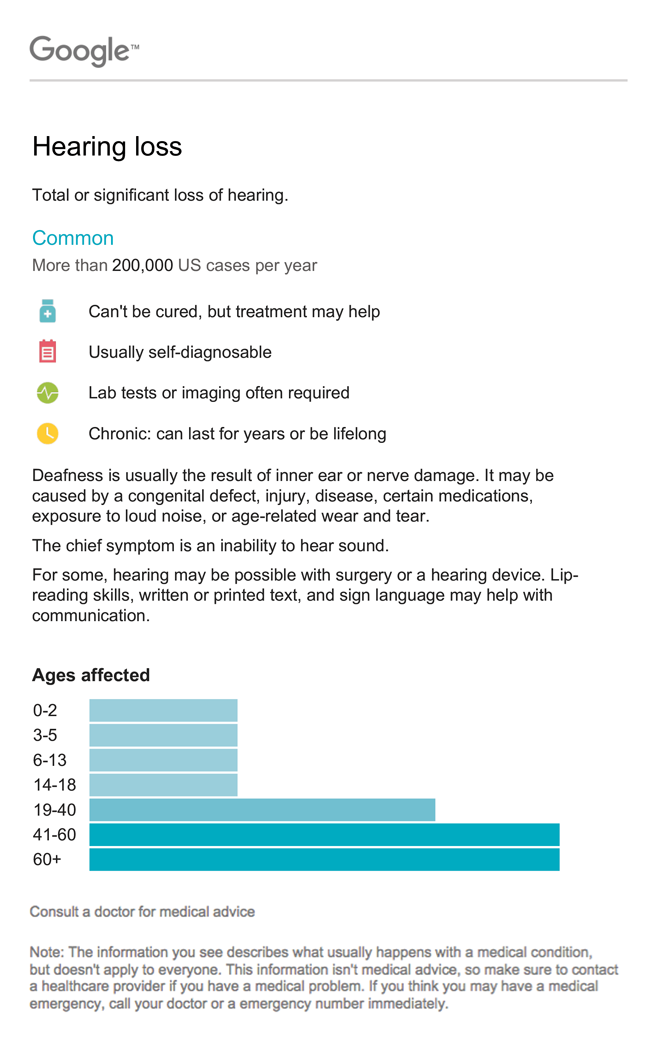 |
| Google Search | Hearing Loss Data |
At Achieve Hearing & Rehabilitation we believe that education leads to a person's success. That's why we spend extra time with our patients to make sure they understand the results of their evaluations and personalized care plans. Achieve Hearing specializes in advanced digital hearing technologies, diagnostic audiological testing, transitioning individuals from hearing loss to successful hearing aid use, and central auditory processing. Most adults acquire hearing loss gradually over time. Thus, many people with a significant hearing loss avoid getting help because they do not realize they have a problem. If you or someone you know demonstrates any signs and symptoms of hearing loss please call us at 972-608-0416 to discuss how Achieve Hearing can help.
Achieve a Balanced Life
References:
WHO World Health Organization | Hearing loss due to recreational exposure to loud sounds
Causes of Hearing Loss in Adults | Acoustic Trauma
Ticketmaster | Monster Jam
Monster Jam | Do you supply ear protection?
Gas Monkey Garage