It's that time of the year when we open our doors for holiday visitors and talking about old stories that everyone can smile and laugh about. Some families will spend time opening gifts while others hit the highways and the friendly skies to visit friends, nieces, nephews, aunts, uncles, grandmas and grandpas across the United States and beyond. So what does this have to do with hearing loss or the hearing impaired you ask? There are three very important points the host family or friend should consider priorities:
- Fire alarm decibel (dB) levels as they relate to family or friends in the age range of 61-71
- Fire alarms types for people who are deaf or hard-of-hearing
- Loud toys for children
Experiencing a home fire can mean major trouble for grandma, grandpa if they cannot hear the alarm. According to the Consumer Product Safety Commission (CPSC), residential smoke alarms operate at sound frequencies that may produce alarm sound characteristics poorly suited for the older population because of age-related hearing loss.
A study by Davis (1995, UK) indicated that for study participants in the age range of 61-71 years, 51% had a hearing loss greater than 20 dB and 11% had a hearing loss greater than 40 dB. As the age range increased, the percentage with hearing loss also increased. For example, for study participants in the age range of 71-80 years, 74% had a hearing loss greater than 20 dB and 30% had a hearing loss greater than 40 dB.
Smoke alarms can help you escape a fire in your home and save lives. But for those who are deaf or hard-of-hearing, they cannot depend on the sound of the regular alarm to alert them to a fire. The good news is there are smoke alarms for people who are deaf or have profound hearing loss. These alarms use strobe (flashing) lights to wake or alert the person and vibration notification appliances, such as pillow or bed shakers that are activated by the sound of a smoke alarm. Most major smoke alarm companies offer alarms with strobe lights.
So, lets keep the Christmas tree watered to avoid a holiday fire so we can continue playing with the children and the new toys. There is however a measure of safety we should also consider when it comes to selecting toys for the next generation.
The CPSC reminds parents to avoid toys that produce extremely loud noises that could damage a child's hearing. For example, caps used for cap guns may also pose a noise hazard. Toy caps and some noise-making guns and other toys can produce sounds at noise levels that can damage hearing. Do not fire closer than one foot to the ear. Do not use indoors.
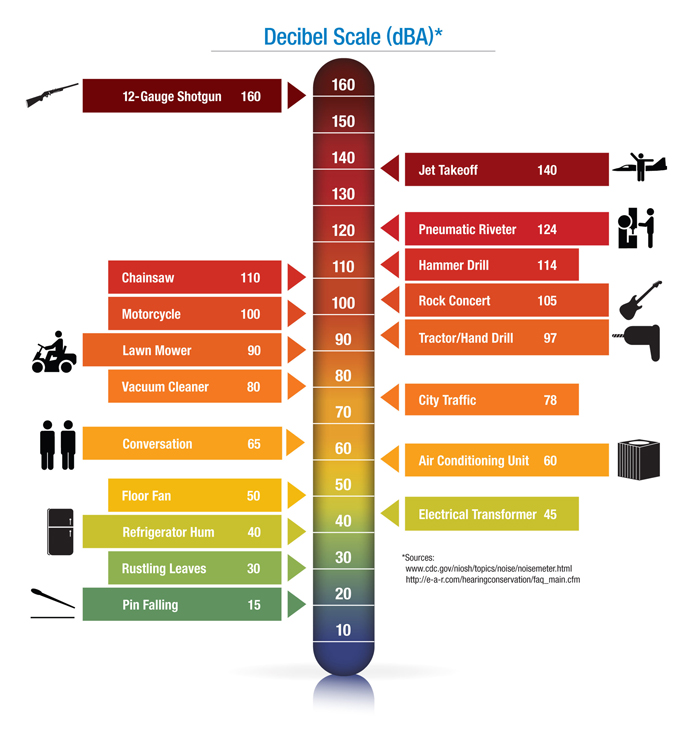
The Arizona Commission for the Deaf and Hard of Hearing states some of the top toys on the market are extremely harmful for children and can lead to permanent hearing damage. Officials say if you already own a “noisy” toy put heavy thick tape over the speaker or use the volume control. They also say parents should limit the number of hours using the toy or music player. 85 decibels (dB) is the maximum volume a child should be exposed to for no more than eight hours.
Decibels (dB) are a unit of measurement to gauge volume and decibel volume is measured in several industries including construction and engineering to ensure hearing safety. Sounds over 100 dB can damage hearing in less than 15 minutes of exposure. You may think loud toys are mostly designed for older kids, however, the majority of noisy toys are for children 6-years-old and younger. Lullaby type toys are often placed in cribs with infants, exposing the baby to excessive noise for extended periods of time.
"Be extremely vigilant when it comes to the toys you purchase for the holiday season and beyond."
Hearing problems can drastically affect children in their learning and social environments. The most significant impact is on: vocabulary, sentence structure, speaking, academic achievement, and social functioning.
Technology continues to astound and today there are phone apps for measuring noise levels. We (Achieve Hearing & Rehabilitation) do not endorse these apps, however they may help you identify situations where noise levels could damage your hearing:

Noise Meters on Google Play for Android phones rated 4 out of 5 stars
Sound Meter Pro
Sound Meter PRO uses your Android's microphone to measure levels of noise or sound pressure levels and displays measured data in dB (decibels) with reference to generally known noise (provided by American Academy of Audiology) or displays the noise data on easy to read graph for the last 30 seconds of app use.
Sound Meter
This decibel meter uses your built-in microphone to measure sound volume in decibels (dB) and also displays sound level charts in the form of graph.
Sound Meter HQ
"Sound Meter HQ" calculates sound level (noise level) of surroundings with the help of built-in microphone. Result of the measurements are displayed in decibels on the screen of you phone.

Noise Meter on iTunes for iPhones rated 4 out of 5 stars
Decibel Meter Pro is a bargain. It's a great tool for anyone who is concerned about noise levels
Decibel Meter
Decibel Meter (Pro) also tells you decibel exposure time guidelines. It tells you how loud is too loud. It tells you what's Noise induced hearing loss and how to avoid it
SPLnFFT Noise Meter
For daily use, a very simple interface displays the level of exposure: if orange or red, protect your ears
Most adults acquire hearing loss gradually over time. Thus, many people with a significant hearing loss avoid getting help because they do not realize they have a problem. People who seek early treatment often report that their lives are dramatically improved.
Hearing loss can affect relationships, education, productivity, and most importantly, emotional well being. For the estimated 30 million people in the U.S. who have a hearing loss, selecting the most suitable hearing solution can be a critical factor in achieving a balanced life. Achieve Hearing & Rehabilitation helps patients overcome different types of hearing loss. If you or someone you know demonstrates any signs and symptoms of hearing loss please call us at 972-608-0416 to discuss how Achieve Hearing can help.
Achieve a Balanced Life
References
The Arizona Commission for the Deaf and Hard of Hearing
Consumer Product Safety Commission (CPSC)
National Fire Protection Association (NFPA)